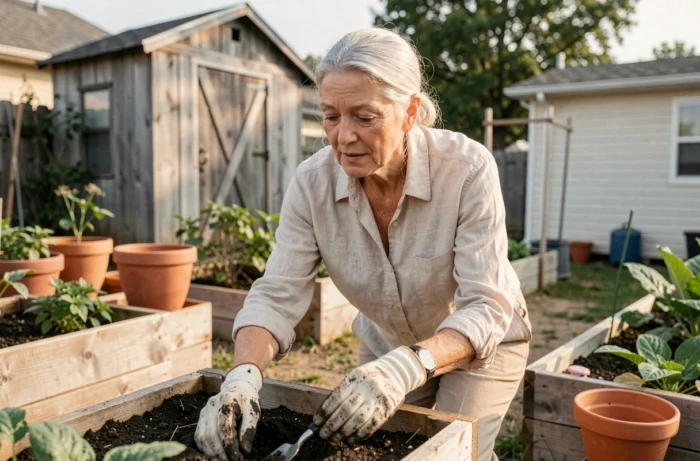
Aging well is not just about accumulating healthy habits. The prevention of aging relies on a triptych that traditional approaches mistakenly dissociate: early detection of frailty, adaptation of the physical environment, and maintenance of structured activity. Here, we detail the most underestimated axes for an active and fulfilling retirement.
Detection of frailty from age 50: the preventive shift not to be missed
Aging prevention becomes more effective when it starts well before the loss of autonomy. A report from the Institut Montaigne published in September 2026, titled Longevity in Health – Preventing to Age Better, proposes structuring a graduated pathway: detection from age 50, evaluation of frailty, and then tailored support.
This logic breaks with the reactive approach of intervening once dependency has set in. The home becomes the central place for prevention, rather than the last resort before entering a facility.
Concretely, this means regularly consulting a healthcare professional trained in geriatric screening, even in the absence of symptoms. Platforms like https://www.cercle-des-seniors.fr allow retirees and future retirees to learn about available resources to anticipate this transition.
The ICOPE program, supported by the World Health Organization, fits into this approach. It assesses five functional capacities (mobility, cognition, vision, hearing, psychological state) to detect early signs of decline. Early screening allows for action before frailty becomes irreversible.
Housing adaptation: a preventive lever as decisive as physical activity
Advice for aging well generally focuses on diet and exercise. However, adapting the home remains the most determining factor for prolonging daily autonomy.
The report from the Institut Montaigne details concrete interventions whose impact on fall prevention is documented:
- Replacing the bathtub with an accessible shower, featuring a non-slip floor and integrated seat, to reduce the risk of slipping in the bathroom
- Installing grab bars in transition areas (hallways, toilets, entrance) and eliminating level differences between rooms
- Enhancing lighting, particularly in staircases and nighttime passage areas, to compensate for age-related decline in visual acuity
Falls are the leading cause of loss of autonomy among seniors. Adapting one’s home is not a comfort; it is a preventive measure on par with regular physical activity.
Funding for these renovations is subject to departmental aid, notably through the APA (personalized autonomy allowance) at home.
Adapted physical activity after age 60: what generic recommendations overlook
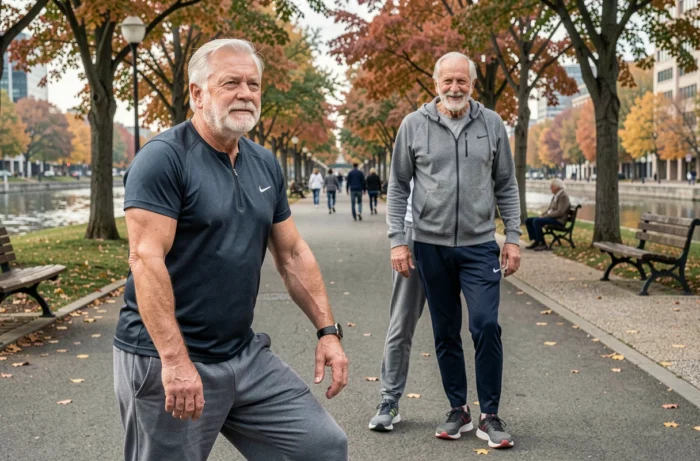
We recommend distinguishing three types of physical engagement, each addressing a different aging mechanism. Most guides merely advise to “move daily” without prioritizing the recommendations.
Balance training takes precedence over endurance for individuals over 65. Tai chi, adapted yoga, or simply daily single-leg support exercises significantly reduce the risk of falling.
Next comes muscle strengthening. Sarcopenia (age-related muscle loss) begins well before retirement. Regular sessions with light resistance, two to three times a week, are sufficient to slow this process.
Cardiovascular endurance (brisk walking, swimming, cycling) remains relevant, but it does not compensate for balance deficits or muscle wasting. An effective health prevention program combines all three in this order of priority.
Nutrition and cognition: the two underutilized angles of aging well
The diet of retirees often suffers from an overlooked issue: malnutrition. Contrary to popular belief, the main risk after age 70 is not overweight but insufficient protein intake. A protein source at every meal (eggs, fish, legumes, dairy products) directly contributes to combating the sarcopenia mentioned earlier.
Cognitively, stimulation does not solely come from crossword puzzles or memory games. Learning new skills engages brain plasticity more than repeating familiar exercises. Learning an instrument, taking a language course, or getting acquainted with unfamiliar software generates neural connections that routine activities do not engage.
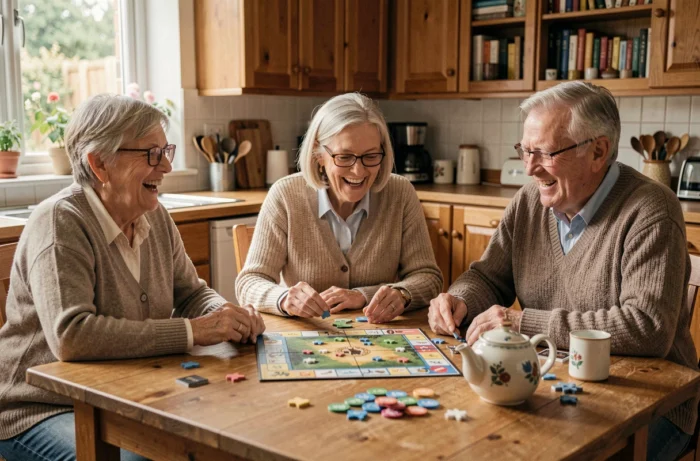
Social connections play a catalytic role here. Cognitive activities practiced in groups (writing workshops, book clubs, collective courses) combine intellectual stimulation and prevention of isolation, two pillars of healthy aging.
Staying at home and social life: articulating autonomy and collective ties
The majority of seniors wish to age in their own homes. This choice is only viable with a coordinated environment: adapted housing, access to care, and structured social life.
Staying at home does not mean being alone. The risk of isolation increases with age, and its effects on physical and mental health are well documented. Structuring one’s social life after retirement requires intentional effort:
- Participating in preventive activities offered by pension funds (memory workshops, walking groups, balance sessions)
- Engaging in local volunteering, which combines social utility and a sense of belonging
- Maintaining or creating intergenerational contacts, whose protective effect on cognitive decline is regularly observed
Successful aging is rarely a solitary project. The articulation between home autonomy and collective engagement forms the foundation of a fulfilling retirement. The recommendations from the Institut Montaigne converge towards this same conclusion: early prevention, adapting the living environment, and maintaining social ties form an inseparable triptych.