
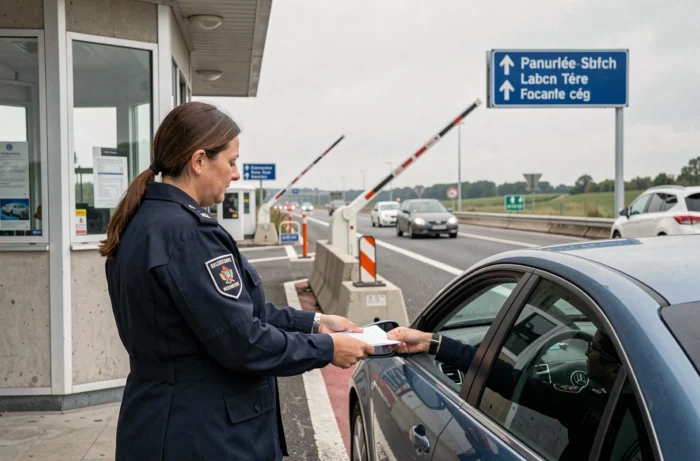
We cross the Spanish border, spot a tobacco shop with prices significantly lower than in France, and fill the trunk. Returning to the toll booth, facing a customs officer, can sometimes be less straightforward than expected. Since the decree of March 29, 2024, French rules on the transport of tobacco from an EU country have changed profoundly, and the control mechanism no longer relies solely on a simple counting of cartons.
Bundle of clues: customs no longer only counts cartons
Before 2024, a fixed threshold was used. Since the decree of March 29, 2024, France has aligned itself with European law: there is no longer a strict legal numerical limit for tobacco brought back from an EU country, including Spain.
What replaces the old threshold is a global assessment by customs officers. The quantity transported is just one element among others. Officers examine a set of criteria to determine whether the tobacco is intended for personal use or for resale.
- The frequency of trips: multiple round trips to Spain within a few weeks attract attention, even with modest quantities at each crossing.
- Packaging and distribution: tobacco distributed in several bags, hidden under blankets, or stored in an unusual manner in the trunk is a strong signal of commercial transport.
- Lack of receipts: being unable to present a receipt from the Spanish tobacco shop complicates the demonstration of personal use.
- The number of adults in the vehicle compared to the quantity transported: ten cartons for a solo driver raises more questions than for four adult passengers.
When preparing a purchase of cigarette cartons in Spain, keeping your receipts and limiting the frequency of trips remains the best protection against this new mode of control.
Indicative thresholds for tobacco from Spain: what 800 cigarettes really mean
The figure of 800 cigarettes (or four cartons) appears everywhere. It is important to understand what it represents: an indicative threshold, not an acquired right. Below this quantity, the presumption of personal use works in your favor. Above it, it is up to you to prove that the tobacco is indeed intended for your consumption.
This distinction changes everything practically. Transporting three cartons does not guarantee the absence of control, especially if customs officers notice repeated trips. Conversely, exceeding 800 cigarettes does not automatically trigger a penalty, provided you can justify strictly personal use.
Other tobacco products affected
The indicative thresholds do not only apply to cigarettes. For cigars, cigarillos, and rolling tobacco, distinct reference quantities also apply. The logic remains the same: below, the presumption works for you; above, the burden of proof shifts.
Each tobacco product has its own indicative threshold, and customs officers evaluate them separately. Bringing back both cigarettes and rolling tobacco in large quantities accumulates unfavorable signals.
Customs penalties for tobacco: what happens in case of exceeding limits
A recent case in Haute-Garonne illustrates the reality on the ground: a motorist coming from Spain was intercepted by customs in Cierp-Gaud with 237 cartons of cigarettes hidden under blankets. This falls into the realm of characterized smuggling, not a smoker who has overdone it.
For more common quantities, the consequences vary. The confiscation of tobacco is almost systematic beyond the indicative threshold when personal justification does not convince. Fines are also imposed, the amount of which depends on the quantity and circumstances.
Illegal resale: the trap of repeated trips
The least known point concerns cross-border smokers who make the trip regularly. Even staying under 800 cigarettes at each crossing, frequent round trips can lead to reclassification as illegal resale. Customs now cross-reference data and spot travel habits.
On this point, the outcomes vary: some regular cross-border travelers have never been troubled, while others have been checked after only two or three close trips. The frequency that triggers a report is not public, making caution all the more necessary.
Proofs to keep when purchasing tobacco in Spain
In case of a check, the burden of proof can shift quickly. A few simple reflexes avoid most complications.
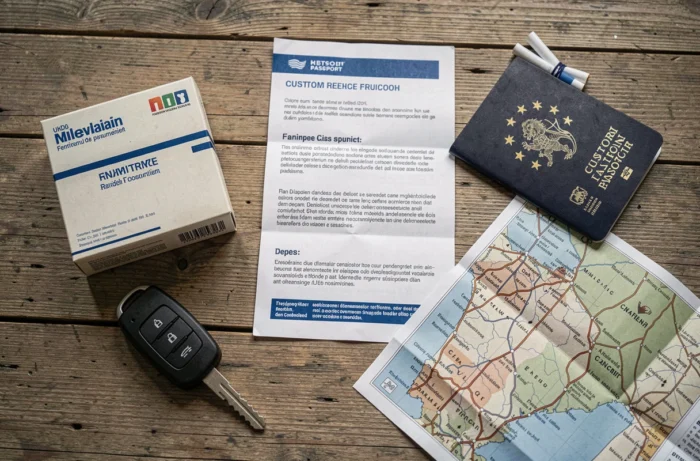
Always keep the receipt from the Spanish tobacco shop. This document proves the place of purchase, the date, and the quantity. Without it, the customs officer only has your word, and word is not enough when the quantity transported is significant.
Also keep your boarding pass or toll receipt if you are traveling by car. These elements attest to the reality of the trip and its date. A complete file (receipt, toll, identity of passengers) protects better than any oral argument.
For smokers traveling in groups, noting the number of adults present in the vehicle at the time of purchase may seem excessive, but some customs officers explicitly ask for it during checks. The tobacco must be credibly distributed among the people present.
The French regulations on tobacco brought back from Spain no longer function as a numerical barrier with a clear threshold. It is an assessment system where good faith is demonstrated by tangible evidence, not by counter certainties. Keeping receipts, spacing out trips, and staying within quantities consistent with personal consumption remains the only reliable approach against customs checks.