A family trip relies on a balance between the pace of children, the desires of adults, and the logistical constraints of the stay. Choosing the right activities in advance changes the dynamics of the trip: less time wasted on-site, less frustration, more shared moments. Families that prioritize less dense itineraries and regional destinations generally have smoother stays, according to the Hilton 2025 Trends Report.
Family activities in nature: adapting the effort to each age
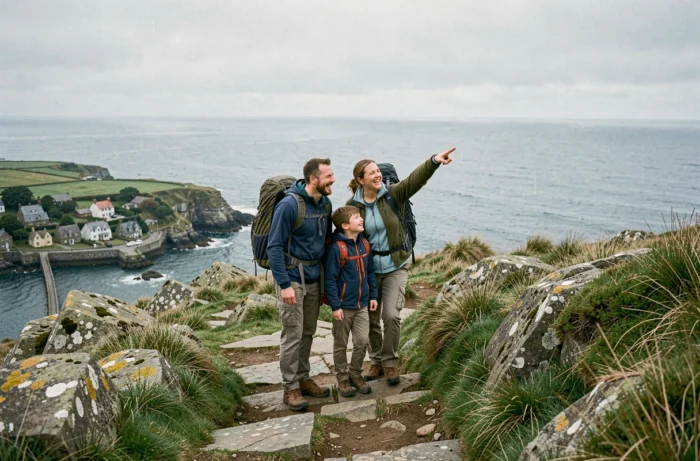
Hiking remains the most accessible activity for a family trip, provided the difficulty is adjusted. A marked trail of a few kilometers with a moderate elevation gain is suitable for children as young as four or five years old. Longer or more technical routes are aimed at families with teenagers.
The key point that makes a difference: the choice of terrain determines the success of the outing. A shaded forest path will be passable even in summer, while a coastal trail exposed to the sun will require frequent breaks and appropriate gear.
Beyond walking, nature offers a variety of activity formats. Canoeing on calm rivers, wildlife observation in a reserve, or fruit picking at a public farm allow for varied days without multiplying travel. Finding all activities on Voyageurs Créateurs helps quickly identify those that match your children’s age group and your destination.
- Short hike (less than two hours): suitable from age four, ideal for keeping younger ones engaged
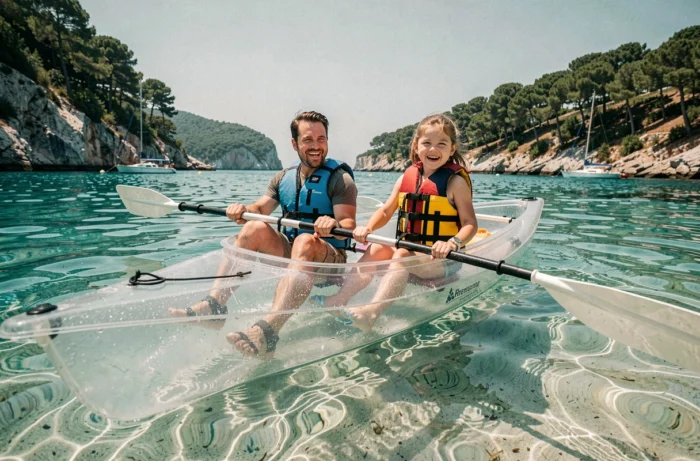
- Kayaking or canoeing on calm water: feasible for families from age six or seven with a life jacket
- Guided nature outings: bird watching, tides, botanical trails, often free in regional parks
Intergenerational travel: planning activities with varying effort levels
Intergenerational travel, which brings together children, parents, and grandparents, represents a distinct use case from a nuclear family stay. Each generation has a different threshold for fatigue and interests, which requires thinking about activities in tiers.
Architectural heritage works well for this format. Visiting a historic village, a castle, or a museum allows grandparents to participate without physical effort, while children explore at their own pace. Sites that offer playful routes (activity booklets, treasure hunts) make these visits more engaging for younger ones.
Structuring the day around two speeds
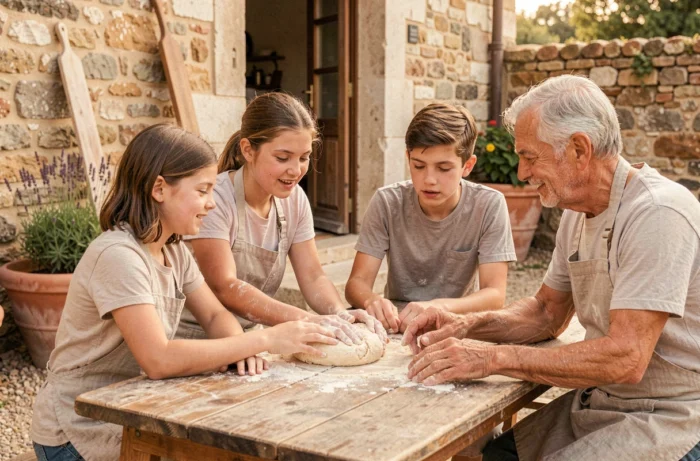
An effective approach is to plan a common activity in the morning (local market, accessible walk, cooking workshop) and a la carte activities in the afternoon. Teenagers can go biking or kayaking while grandparents enjoy a moment of rest or a nearby cultural visit.
The intergenerational stay succeeds when no one is waiting for anyone. For this, the choice of accommodation is as important as the choice of activities. A cottage with a shared outdoor space or a rental close to several points of interest reduces travel time and allows everyone to adjust their day.
Budget and local activities: reducing costs without sacrificing experience
Cost remains a major barrier for family vacations. Commercial activities (amusement parks, sports camps, organized excursions) quickly add up to the budget, especially with multiple children.
Local aid programs exist but are not well known. Some local authorities offer reduced rates or holiday vouchers for families, particularly through family allowance funds or works councils. Checking available assistance before departure can cover part of the activity costs.
Free or low-cost activities in France
France offers a dense network of natural sites accessible without entrance fees. Regional natural parks regularly organize free guided outings. Beaches, long-distance hiking trails, and inland lakes provide limitless playgrounds for families.
- Geocaching: free GPS treasure hunt, feasible anywhere in France with a smartphone
- Swimming in natural bodies of water: monitored lakes and rivers in season, a free alternative to water parks
- Local markets and open farms: discovering local produce without an entrance fee, often with tastings
- Municipal summer workshops: some municipalities offer creative or sports camps at a symbolic price
Formalities and practical constraints before the family trip
The most inspiring activities lose their appeal if administrative constraints have not been anticipated. For a trip in France with minor children, identity documents are sufficient. However, a child traveling without one of their parents needs an exit authorization from the territory if the trip involves crossing a border.
In cases of parental separation, the question of the other parent’s agreement to go on vacation with the children arises systematically. The general rule requires informing the other parent of the location and dates of the stay, even without a formal obligation to request authorization for a trip in France.
Anticipating the specific needs of children
The needs of children directly influence the choice of destination and accommodation. A young child imposes constraints on naptimes, meals, and equipment (travel crib, stroller suitable for the terrain). A teenager will need stimulating activities to avoid boredom.
The trend towards less dense itineraries responds to this observation. Rather than visiting three regions in one week, staying in one place allows for a reassuring routine for younger ones while exploring the surroundings in depth. This format also limits the fatigue associated with travel, the primary source of tension in family trips.
The choice of activities for a family trip is made before departure, balancing ages, budget, and the format of the stay. Families that prepare two or three options per day, without trying to fill every moment, leave room for the unexpected, often the best memory of the trip.