What criteria truly distinguish a trendy handbag for 2024 from a model destined to disappear from wardrobes by the following season? Between the formats that remain on the runways, the materials gaining ground, and a European regulation redefining what brands can produce, the parameters to observe far exceed mere aesthetic considerations. The women’s handbag is becoming an object where style, sustainability, and legal constraints converge.
European Regulation ESPR and Handbags: What’s Changing for Collections
The European regulation Ecodesign for Sustainable Products Regulation (ESPR), referenced under Regulation (EU) 2024/1781, profoundly modifies the logic of handbag collections. The destruction of unsold textiles, including accessories, will be gradually prohibited for large companies starting from July 19, 2026.
Brands must already publicly declare the volume of unsold products destroyed: number, weight, method of treatment. This forced transparency creates direct pressure on the design of collections.
A bag that is too seasonal or too “micro-trendy” now represents a regulatory risk and a reputational risk. Houses are steering their collections towards more versatile models designed to last several seasons. The understated leather tote or the crossbody bag are gaining ground precisely because they withstand the years without becoming problematic unsold items. The references spotted on the My Sac! website illustrate this shift towards pieces designed for longevity rather than ephemeral fashion effects.
Another aspect of the same regulation provides for the mandatory arrival of the Digital Product Passport (DPP) for textile accessories, with a delegated act expected by 2027. Each bag will carry a digital sheet tracing its materials, place of manufacture, and environmental footprint. Traceability is becoming a selling point as much as a legal obligation.

Leather Bags, Alternative Materials, and Upcycling: Comparative Table of Material Trends for 2024
The choice of material influences both the style and the lifespan of a bag. Here’s how the major families of materials rank on the criteria that matter in 2024.
| Material | Perceived Durability | Seasonal Versatility | ESPR Compatibility |
|---|---|---|---|
| Full-grain leather | Very high | All seasons | Strong (longevity, repairable) |
| Vegetable leather / alternatives | Variable depending on composition | All seasons | Medium (depends on recyclability) |
| Upcycled materials | High (second life) | Depending on the model | Very strong (reduction of unsold items) |
| Straw / raffia | Low to medium | Spring-summer | Low (limited seasonal use) |
| Technical textiles (nylon, coated canvas) | Medium to high | All seasons | Medium (complex recycling) |
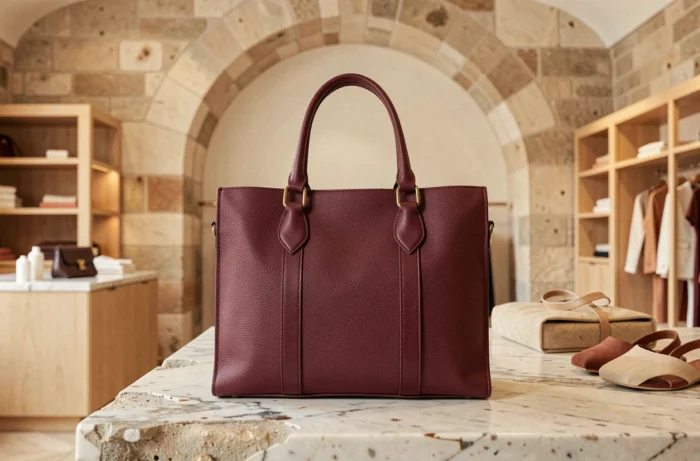
Full-grain leather remains the dominant material for handbags intended for daily use. Its ability to patina, be repaired, and last through several seasons makes it the choice most aligned with regulatory requirements and consumer expectations.
In contrast, seasonal materials like raffia or straw, which are very present in summer guides, pose a problem of rapid turnover. A straw bag worn for three months and then stored indefinitely perfectly matches the product profile that the ESPR regulation seeks to limit.
Trendy Bag Formats for 2024: Crossbody, Tote, and Mini-Bag Facing the Test of Everyday Life
Runways present about ten formats each season. Three stand out for their ability to meet real uses, not just photographic criteria.
- The chain crossbody bag has maintained its place for several seasons. Its intermediate format allows for carrying essentials while keeping hands free, which explains its constant presence in urban wardrobes.
- The structured leather tote, often offered in neutral colors, works equally well in professional contexts and weekend outings. Its volumetric capacity makes it hard to replace with a miniature format.
- The mini-bag, despite its high visibility on social media, remains a complementary accessory. Its reduced space confines it to evenings or occasions where one carries few belongings.
The women’s fanny pack, long considered a sportswear format, has found its way into fashion collections thanks to soft leather versions and refined finishes. Its crossbody or waist-worn style adds a relaxed touch that works with structured outfits as well as more casual looks.
Colors and Style: The Shades That Structure Looks for 2024
The colors of handbags follow two distinct logics this year. On one hand, neutral shades (black, cognac, taupe, cream) dominate sales because they integrate into any wardrobe without creating fatigue.
On the other hand, red is establishing itself as the statement color of 2024. A red leather bag worn over a monochrome outfit is enough to anchor a style without multiplying accessories. This color has the advantage of working well in both winter and summer, distinguishing it from pastel shades often limited to fine weather.
Metallic finishes (gold buckles, silver clasps, visible chains) add an extra dimension. On a black crossbody bag or a grained leather tote, a metallic detail transforms a functional accessory into a fashion piece without additional effort.
Buying a Handbag in 2024: The Criteria That Really Matter
The question is no longer just “which model is in fashion” but “which model will remain relevant.” The criteria to check before a purchase have expanded.
- The quality of stitching and finishes determines longevity far more than the brand name. Well-crafted leather with saddle stitching will last for years.
- The versatility of the format: a bag worn in three different ways (hand, shoulder, crossbody) justifies its price better than a model limited to a single carry option.
- Compatibility with your existing wardrobe. A trendy bag that only matches two outfits will remain in the closet most of the time.
European regulatory pressure is pushing brands towards bags designed to last. Women investing in a versatile leather model are also buying into a form of compliance with the evolution of the market. The handbag of 2024 is chosen as much for its style as for its ability to remain in the wardrobe well beyond a season.