Opening your wardrobe every morning and hesitating in front of a pile of clothes is a familiar situation. Daily style doesn’t depend on the number of pieces you own, but on how you choose, combine, and care for them. A few concrete adjustments are enough to transform an ordinary closet into a cohesive and enjoyable wardrobe.
Second-hand and repair: building a sustainable style
Before discussing colors or cuts, one question deserves to be asked: have you ever looked at what you wear most often? In most cases, it’s five or six pieces. The rest hangs on hangers.
Starting from this observation changes the way you shop. Second-hand allows access to higher quality pieces for a fraction of the original price. A wool coat found in a thrift store will last several winters, while a new low-quality equivalent will lose its shape in a few months.
Repairing further extends this logic. Sewing on a button, taking up a hem, or replacing a zipper are simple actions. A well-fitted pair of pants altered for a few euros looks more polished than a poorly cut new garment. Tailoring shops can be found in most city centers, and some recycling centers now offer workshops to learn how to repair items yourself.
Building your look around durable and repaired pieces is also a concrete way to reduce the impact of textile consumption. The trend towards more local and transparent fashion is confirmed season after season, driven by a growing demand from buyers for clothing whose origins they know. On Le Royaume de la Mode, this approach translates into selections that prioritize the longevity of pieces over constant renewal.

Capsule wardrobe: choosing pieces that work together
The principle of a capsule wardrobe can be summed up in one sentence: each garment should be able to combine with at least three others. If a piece only goes with one outfit, it clutters more than it serves.
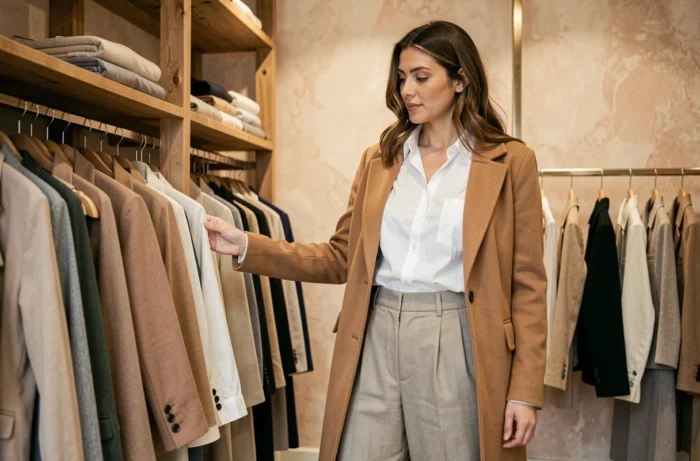
In practical terms, this starts with a foundation of basics in compatible shades. A straight navy pant, a raw denim jean, a thick white cotton t-shirt, a light shirt, and a structured jacket already form about ten different outfits.
Criteria for a versatile piece
- The material must withstand frequent washes without losing shape. Dense cotton, linen, and merino wool age better than fine synthetic fibers.
- The cut should be fitted without being tight, to remain comfortable in any position (sitting, walking, biking).
- The color should match the rest of the wardrobe. Neutral tones (navy, beige, gray, off-white) serve as a link between bolder pieces.
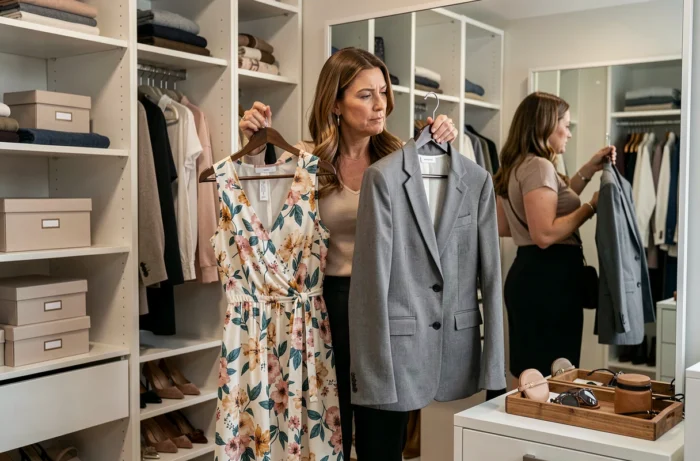
Once this foundation is in place, you can add two or three statement pieces. A patterned dress, a colorful blazer, or a striking accessory is enough to personalize the whole look.
Adaptive fashion and real comfort: a style for all bodies
Clothing comfort is not limited to the size on the label. Adaptive fashion rethinks clothing for different bodies and mobilities. Magnetic closures, side openings, adjustable belts: these technical details make daily dressing easier.
This approach concerns everyone. A pregnant woman, a person in a wheelchair, someone suffering from joint pain: everyone benefits from wearing clothes designed for the actual movement of the body. The adaptive fashion sector represents a growth opportunity that many brands are beginning to take seriously.
Have you ever noticed that pants that are too tight at the waist change your posture, mood, and way of moving? Choosing comfort is not a compromise on style. It’s the opposite: a garment that feels good is worn with more confidence.
Three adjustments that change the comfort of an outfit
- Replace a rigid belt with an elastic woven model. The support remains the same, but freedom of movement increases.
- Choose shoes with a soft sole rather than a thin flat sole. The foot works better, and the silhouette gains dynamism.
- Prefer materials with memory (structured jersey, ribbed knit) for tops worn all day. They return to place after each movement.
Accessories and colors: asserting a look without changing everything
You don’t need to renew your wardrobe to change your style. A differently tied scarf, a pair of geometric earrings, or a bag in a bright color can transform a neutral outfit into a bold look.
Accessories act as accents in a sentence. They direct the gaze and give intention to the whole. The same pants and t-shirt can go from casual to chic simply by changing shoes and adding a structured belt.
For colors, a simple method works: observe the ones you already wear with pleasure. If blue appears often, it’s probably a shade that enhances your complexion and in which you feel comfortable. Starting from this base to explore nearby shades (teal, slate blue) allows you to expand the palette without the risk of a misstep.
Body shape also plays a role in choosing proportions. An oversized accessory on a petite silhouette creates a visual imbalance. Conversely, accessories proportionate to the body harmonize the outfit effortlessly.
Daily style is built with concrete choices: quality pieces (new or second-hand), thoughtful combinations, and comfort that respects the body as it is. Each repaired garment rather than replaced, each well-chosen accessory rather than accumulated, contributes to a wardrobe that lasts and reflects you.