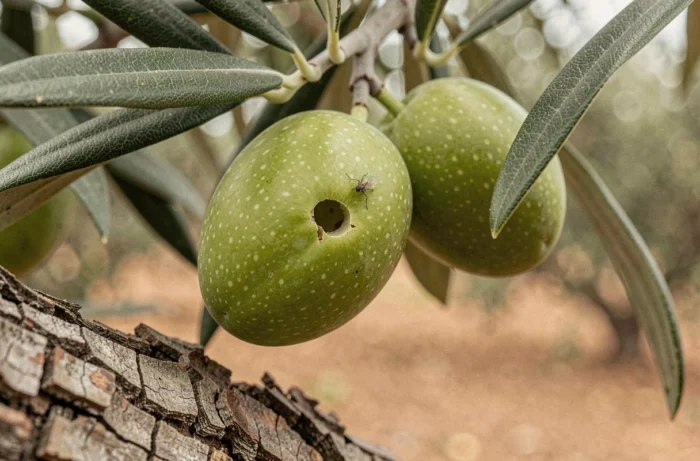
The olive fly (Bactrocera oleae) lays its eggs directly in the fruit. The larva burrows a gallery inside the olive, causing it to drop prematurely, and when the fruit remains on the tree, it increases the acidity of the oil to the point of compromising its classification as extra virgin. Protecting an olive tree means first understanding when the insect becomes active and which levers to act on before it’s too late.
Oil acidity and olive drop: what the larva causes in the fruit
The galleries created by the larva generate micro-internal wounds. These openings promote the oxidation of the pulp and the development of mold, well before the damage is visible from the outside.
The acidity of the oil increases significantly as the tissues degrade. In some cases, this increase is enough to lose the classification as extra virgin. For an olive grower engaged in an AOP or short supply chain sales, the qualitative loss far exceeds the simple decrease in yield.
Olives that fall to the ground before maturity can no longer be harvested in good conditions. The pupae from these fruits burrow into the soil and ensure the continuity of the parasitic cycle. Protecting the current harvest also means reducing the reservoir of adults for the following season.
You can find advice on Une Fleur Un Jardin to delve into the intervention calendar suitable for your region.
Intervention window against the olive fly: temperature and fruit size
Egg-laying intensifies when the temperature fluctuates between 20 and 28 °C. Above 35 °C, heat waves combined with drought temporarily reduce the survival of adults, as the lack of water is very detrimental to them.
The critical period begins in late spring or early summer, depending on the variety and the olive-growing region, and continues until harvest.
Two indicators to cross-reference
- The average daily temperature: a series of days above 20 °C triggers egg-laying activity. High temperatures above 35 °C, combined with a lack of water, temporarily slow down the adult population.
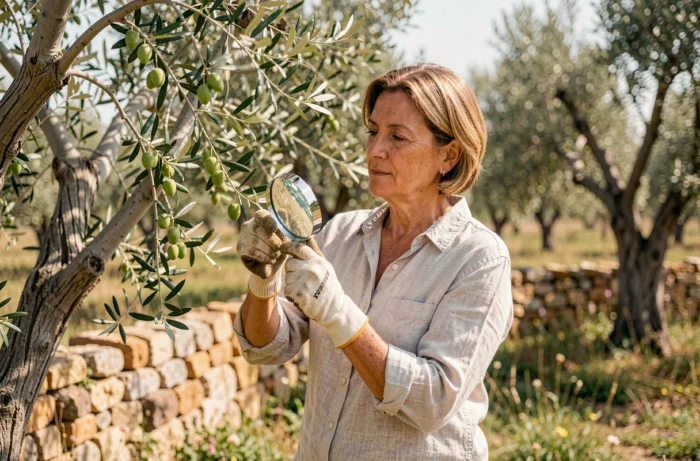
- The size of the olives: as soon as the fruits grow large enough for the female to insert her ovipositor, monitoring must begin. The larger the fruit develops, the more it becomes a target for laying.
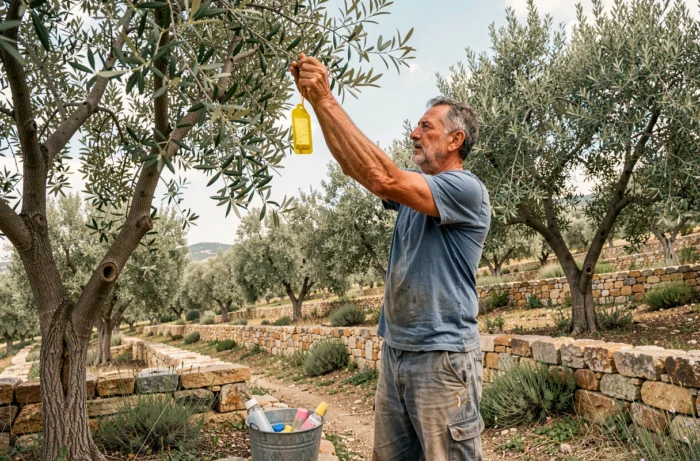
- Trap readings: in France, the Plant Health Bulletin for Olive and the GESTOLIVE network from France Olive publish geolocated capture data. These regional bulletins allow for precise identification of the flight peak in each basin.
Waiting to see punctures on the olives means intervening after the first generation. Trapping and reading regional bulletins trigger the decision, not the visual observation of damage on fruits.
Calcined kaolinite on olive trees: application and limits of the mineral barrier
Calcined kaolinite (white clay treated at very high temperatures) is the most documented protection method in organic olive cultivation. This calcination process gives it better resistance to leaching, thermal shocks, and UV compared to green or gray clays.
The mode of action is purely mechanical. The white film alters the color of the fruit, preventing the fly from recognizing its host plant. It also blocks the volatile compounds that guide the insect to the olive. Faced with these two obstacles, the female gives up laying or fails to pierce the mineral layer.
Conditions for real effectiveness
When applied correctly, white clay can reduce damage by 70 to 80%, even in years with high parasitic pressure. Several conditions determine this result:
- Cover the entire foliage, including the interior of the crown. Any unprotected area becomes an entry point for laying.
- Renew the treatment after each significant rain. Leaching remains the primary cause of failure.
- Apply before the start of laying, as soon as the olives reach a size of 8 to 10 mm. A late treatment allows the first generation to settle.
When pressure remains high at the end of the season, a complementary treatment with Spinosad (Synéïs bait) may be considered, respecting the 7-day pre-harvest interval. This product has a negative effect on many beneficial organisms, and its repeated use encourages the development of resistance. It should be reserved for situations where the mineral barrier is no longer sufficient to contain the damage.
Winter soil work and trapping: lowering the population before the season
The olive fly overwinters in the pupal stage, buried in the first centimeters of soil under the foliage. A superficial soil treatment in early winter brings these pupae to the surface. There, they are exposed to the cold and natural predators (birds, free-range chickens).
This intervention does not eliminate the insect. It significantly reduces the starting population in spring. Combined with mass trapping from the beginning of summer, using pheromone or food attractant traps, it helps limit pressure even before the first application of clay.
Biocontrol and organic farming do not always overlap. A product classified as biocontrol is not automatically allowed in organic: the authorization depends on the specific product and its regulatory labeling. Checking the exact status of each solution avoids unpleasant surprises during a certification inspection.
The protection of the olive tree against the fly relies on a precise sequence: winter soil work, monitoring through trapping and regional bulletins in spring, application of calcined kaolinite as soon as the olives reach the right size, and occasional use of Spinosad only if the pressure exceeds the capacity of the mineral barrier. Skipping any link weakens the next one.