
A natural lawn fertilizer refers to any fertilizer of animal, plant, or mineral origin that is not chemically synthesized. Its primary role is to return to the soil the nutrients exported with each mowing, mainly nitrogen, phosphorus, and potassium (the famous NPK trio). Unlike synthetic formulas that release their nutrients all at once, organic fertilizers first nourish the microbial life in the soil, which gradually breaks them down before making them available to the roots.
NPK Ratio of Natural Fertilizers: What Each Component Brings to the Lawn
Before comparing products in garden centers, it is essential to understand what the three letters printed on each bag mean. Nitrogen (N) stimulates leaf growth and gives that deep green color. Phosphorus (P) promotes deep rooting. Potassium (K) enhances resistance to diseases, foot traffic, and temperature fluctuations.
Each organic fertilizer has its own NPK ratio that determines its use. Bone meal, for example, is very rich in nitrogen but almost devoid of potassium. Mature compost offers a more balanced profile, with modest levels of all three elements. Dried blood releases its nitrogen faster than bone meal, making it akin to a spring boost.
Choosing an effective natural lawn fertilizer therefore involves cross-referencing the product’s NPK ratio with the actual needs of the lawn, rather than just grabbing the first bag labeled “organic” off the shelf.
- Bone meal: slow release, nitrogen-dominant, ideal at the end of winter to kickstart growth without the risk of burning.
- Dried blood: faster release, high nitrogen content, reserved for visibly deficient lawns (general yellowing).
- Manure compost: moderate and balanced NPK profile, also improves the physical structure of the soil by adding stable organic matter.
- Beet vinasse: rich in potassium, useful at the end of the season to prepare the lawn for winter stresses.
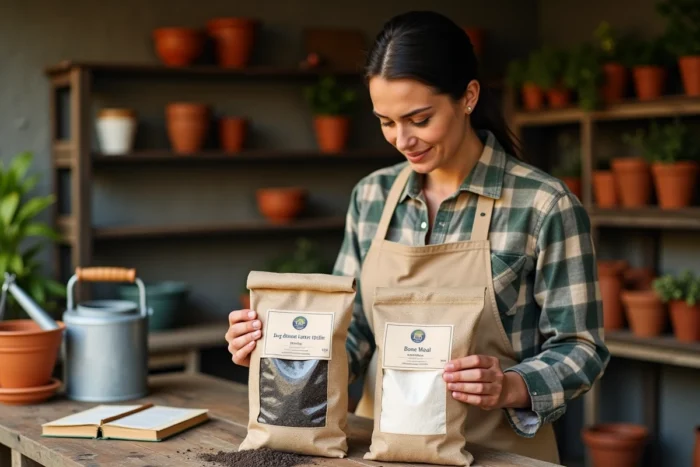
Slow Release vs. Fast Release: The True Criterion for Lawn Selection
The speed at which a fertilizer makes its nutrients available to the roots radically changes the outcome on the lawn. A slow-release product nourishes the soil over several weeks, which corresponds to the natural absorption rate of grasses. Mature compost and bone meal fall into this category.
A fast-release fertilizer, like dried blood or diluted nettle manure, causes a visible growth spurt within a few days. The lawn greens up quickly, but the effect fades just as rapidly. A sudden excess of nitrogen can even promote moss and fungal diseases if the soil is already moist.
For a sustainable lawn, the most reliable strategy is to use a slow-release fertilizer as the base for fertilization, then to correct occasionally with a quick application if the lawn shows signs of acute deficiency. This approach limits nutrient leaching into groundwater, a recurring problem with overdosed synthetic fertilizers.
Soil Analysis Before Fertilization: The Step Most Gardeners Overlook
Spreading a fertilizer without knowing the state of the soil is akin to supplementing a diet without a blood test. The soil pH conditions nutrient assimilation by the roots. An overly acidic soil (pH below 6) blocks phosphorus absorption, even if the compost contains enough. An overly alkaline soil (pH above 7.5) reduces the availability of iron and manganese, leading to yellowing that nitrogen alone will not correct.
pH testing kits are available at garden centers for a few euros. A more comprehensive test, sent to a laboratory, provides information on nitrogen, phosphorus, potassium, and organic matter levels. This diagnosis prevents buying a phosphorus-rich fertilizer when the soil is already abundant in it or unnecessarily liming a field with the correct pH.
A lawn that yellows despite fertilization often signals a pH problem, not a lack of fertilizer. Correcting acidity with a liming amendment before fertilizing can sometimes change the entire outcome.
Digestate from Anaerobic Digestion: A Lesser-Known Local Alternative for Lawns
Natural fertilizers are not limited to products sold in bags. Agricultural digestate, a residue from the fermentation of organic materials in a digester, is beginning to be used as a substitute fertilizer for chemical fertilizers. The Montanay digester illustrates this case: the produced digestate is directly used to fertilize nearby farms, reducing dependence on synthetic inputs.
For individuals, accessing digestate is more complex than buying a bag of bone meal. However, some municipalities or agricultural cooperatives offer it in bulk. Its composition varies depending on the incoming materials (manure, green waste, food scraps), which necessitates knowing its NPK ratio before application.
The interest lies in the dual benefit: fertilizing the lawn while valorizing a local waste. As anaerobic digestion units multiply in France, this option could become more accessible to gardeners concerned with ecological consistency.
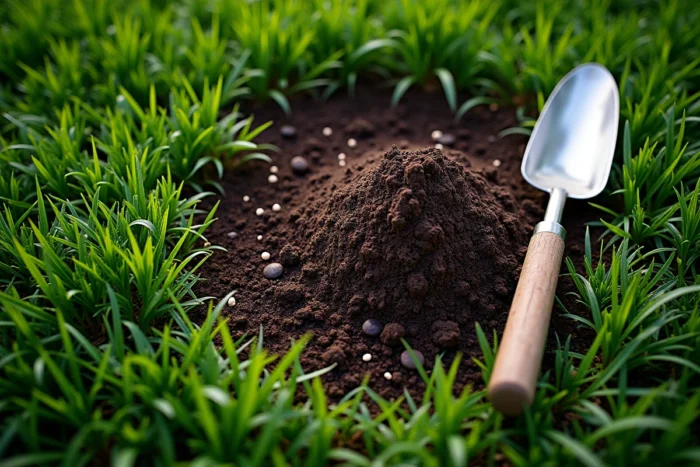
Natural Fertilization Calendar Suitable for Grasses
Lawn grasses have two peaks of root activity: spring and early autumn. Fertilizing outside of these windows wastes the fertilizer and nourishes more moss than grass.
In spring, an application of mature compost or bone meal kickstarts growth after winter dormancy. The slow release of these products supports the rise in vegetation without causing an unmanageable growth spike at mowing time.
In early autumn, a fertilizer rich in potassium (beet vinasse, wood ash in moderate amounts) prepares the roots to withstand frost. Nitrogen should be limited during this period: stimulating leaf growth before winter weakens the blades against the cold.
In summer, under dry conditions, any fertilization is counterproductive. A dry soil does not allow for the microbial decomposition necessary for the release of organic nutrients. It is better to wait for the return of rain.
Ultimately, the choice of a natural lawn fertilizer rests on three verifiable data points: the soil pH, the product’s NPK ratio, and the application period. Well-matured compost applied at the right time covers most of the needs of a domestic lawn, without resorting to complex formulas or risky dosages.