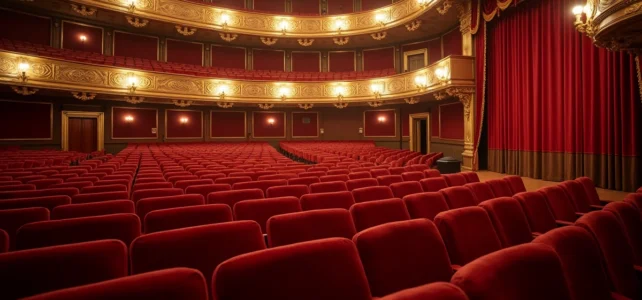
Choosing your seat at the Palais-Royal theater means balancing proximity to the stage, acoustic quality, and visual comfort in an Italian-style auditorium whose oval configuration significantly alters the experience from one seat to another. The theater, located at 38 rue de Montpensier in the 1st arrondissement of Paris, offers several seating categories, the differences of which deserve analysis before any booking.
Orchestra, Box, and Balcony at the Palais-Royal: Category Comparison
The distribution of seats in this historic venue follows a classic division into three main zones. Each has distinct characteristics regarding visibility, acoustics, and pricing.
| Category | Distance to the stage | View angle | Acoustics | Thermal comfort (summer) |
|---|---|---|---|---|
| Central Orchestra | Very close to medium | Frontal, optimal | Direct sound, sometimes unbalanced in the front rows | Warmer (lower level) |
| Lateral Orchestra | Close to medium | Slightly off-center, risk of pillar obstruction | Acceptable, slight loss on the opposite side | Warmer (lower level) |
| Box | Medium | Slightly elevated, clear view | Good sound homogeneity | Best (air-conditioned room, cooler air at height) |
| Balcony | Distant | Overhead, loss of facial detail | More diffuse but enveloping sound | Best (air-conditioned room, cooler air at height) |
The Palais-Royal theater is an air-conditioned venue, a detail rarely mentioned that changes the calculations for summer performances. The higher categories benefit more from the circulation of fresh air, making the box and balcony more pleasant during shows lasting over two hours in the height of summer.
To find out which are the best seats at the Palais-Royal theater, one must cross-reference these parameters with the type of show scheduled: an intimate comedy is experienced differently than a musical performance.
Acoustics and Visibility: Where to Sit According to the Type of Show
The acoustic principles applicable to Italian-style theaters indicate that the best sound homogeneity is located two-thirds of the way back in the auditorium. At the Palais-Royal, this roughly corresponds to the last rows of the central orchestra and the first rows of the box.
In the front rows of the orchestra, the sound arrives very directly. For a spoken theater piece, this proximity can enhance immersion. However, for a musical show or heavily amplified performance, the sound balance becomes uneven: nearby voices sometimes mask the accompaniment.
Oval Configuration and Blind Spots
The oval shape of the auditorium creates a recurring trap. Lateral seats, both in the orchestra and box, offer an angled view that can obscure part of the set. Feedback from experiences in similar historic Parisian venues indicates seats partially obstructed by pillars or architectural elements from certain lateral rows.
Before booking, it is advisable to consult photo sites taken from the seats. These platforms allow you to check the actual view, seat by seat, and avoid an unpleasant surprise that a simple seating plan by category may not reveal.
- The central rows of the orchestra (rows F to K approximately) combine proximity and frontal angle but usually cost more
- The central box offers sufficient distance to embrace the entire stage without loss of detail, with homogeneous sound
- Lateral seats, regardless of the level, present a risk of partial obstruction by the historic pillars of the auditorium
- The balcony is suitable for spectators who prefer an overview and a controlled budget, at the cost of losing proximity to the performers
Booking Your Seat on a Plan: The Underutilized Lever of Ticketing Platforms
Competing articles discuss choice by category. The reality of booking offers much finer granularity. Ticketing platforms like Ticketac or Billetreduc offer, for some performances at the Palais-Royal, an interactive seating plan with a visual indication of available seats.
This feature changes the game. Rather than selecting a category and letting the system assign a seat, the spectator can target a specific row, avoid lateral extremes, and check the position relative to the aisles.
Young Rates and Last-Minute Tickets at the Box Office
The Palais-Royal theater offers specific box office rates, one hour before the performance, from Monday to Thursday: under 26 years old for 10 euros, students for 20 euros. These seats are allocated subject to availability and upon presentation of proof.
The seating obtained with these discounted rates depends on the occupancy of the auditorium. The seats offered are often lateral or elevated. For a spectator flexible on the date, midweek performances increase the chances of obtaining a seat in the central zone even at a reduced price.
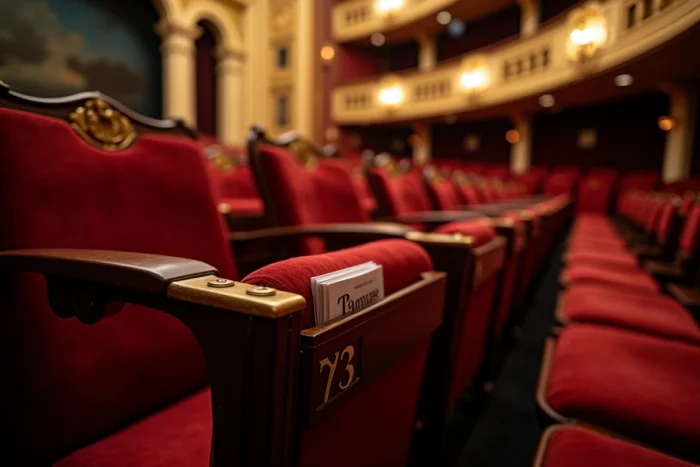
Comfort in the Auditorium and Duration of the Show: Criteria Not to Be Overlooked
The choice of seat is not limited to view and sound. Physical comfort weighs more heavily for long performances. Orchestra seats in historic venues are often narrower than those in modern theaters. The spacing between rows also varies by zone.
For a show exceeding two hours, box seats present an ergonomic advantage: the slight overhang allows for a more natural back support than in the orchestra, where the angle of gaze towards the stage puts more strain on the neck in the front rows.
- Check the duration of the show before choosing: beyond 90 minutes, seat comfort becomes a determining factor
- Prefer central rows over front rows if the stage is elevated, to avoid neck fatigue
- In summer, box or balcony seats benefit from a better air circulation due to air conditioning
The Palais-Royal theater concentrates its strengths in the central box and middle rows of the orchestra. The price difference between these areas and the lateral extremes or high balcony is justified by a measurable difference in terms of visibility, acoustics, and comfort, especially for long performances scheduled during the summer season.