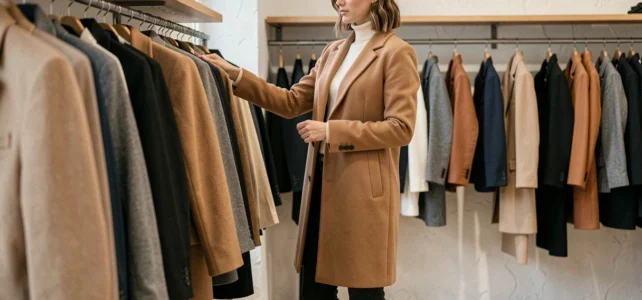
The fashion trends for the autumn-winter 2026 season are not just a list of items to buy. Behind the colors and cuts showcased on the runways, a European regulatory framework is reshaping how collections reach consumers. Understanding these mechanisms allows for better seasonal clothing choices, both in terms of style and sustainability.
ESPR Regulation and Autumn-Winter 2026 Fashion: What Changes for Stocks
Since July 2026, large companies can no longer destroy their unsold new clothing and shoes within the European Union, except for safety-related exceptions. This ban stems from the European ESPR Regulation (EU 2024/1781), gradually implemented by sector, with textiles among the priorities.
The concrete result for seasonal purchases: brands are organizing more private sales, outlet operations, and “archive” capsules to clear their stocks. Pieces from previous collections circulate longer and become accessible through channels that did not exist two years ago.
| Before ESPR (until 2025) | After ESPR (summer 2026) |
|---|---|
| Destruction of unsold textiles allowed | Destruction prohibited for large companies |
| Excess stocks largely invisible to the public | Increase in private sales and archive capsules |
| Little traceability on the life cycle | Mandatory environmental labeling starting October 2026 for brands communicating “green” |
A second turning point arrives on October 1, 2026, with textile environmental labeling in France. Brands claiming an ecological positioning will need to justify their claims with verifiable data. For consumers, this means that labels will become a tangible selection criterion when purchasing a seasonal jacket or jeans.
Following the latest fashion inspirations now involves considering these regulatory developments, which directly influence the collections offered in stores.
Colors and Key Pieces for Autumn 2026
The autumn-winter 2026-2027 shows highlighted several stylistic directions. The combination of red and purple, long considered risky, is making a comeback. The red sweater, worn alone or under a structured blazer, stands out as a strong piece for the season.

The straight jeans are regaining ground against the wide cuts that dominated previous seasons. Paired with a reimagined suit (short jacket, slightly tapered pants), it forms a versatile base for both office looks and outings.
Three axes emerge for building a coherent seasonal wardrobe:
- The deconstructed suit: oversized jacket worn open over a simple t-shirt, with straight pants or jeans. This duo works well in both professional and casual contexts.
- The midi dress paired with flat boots: a silhouette that effortlessly transitions through autumn, playing with materials (thick knit, corduroy, brushed cotton).
- Textured layering: sleeveless vest over a shirt, short trench over a fine sweater. The idea is to create volume without weighing down the silhouette, varying lengths.
This season’s style relies less on the accumulation of trendy pieces and more on the ability to combine a few well-chosen elements.
Buy Less and Better: The Impact of Resale Channels on Style
The ban on destroying unsold items pushes brands to supply second-hand platforms or launch their own take-back programs. This phenomenon alters the logic of seasonal purchasing: a piece from a previous collection bought in an outlet costs less and remains stylistically relevant.
The textile resale market has taken a structural place in shopping habits. The “archive” capsules allow access to cuts or colors that are no longer in production, providing an advantage in terms of originality compared to pieces from the current collection.

For the autumn 2026 season, this dynamic is particularly visible in three product categories:
- Mid-season jackets and coats, with models from the spring 2026 collections appearing in outlets as early as September.
- Jeans with specific cuts (barrel, bootcut), often available at reduced prices a few months after their launch.
- Accessories (bags, belts, scarves) from capsule collections, which gain perceived value once removed from the official catalog.
Environmental Labeling and Wardrobe Choices Starting October 2026
Starting October 1, 2026, brands that communicate their ecological commitment will need to rely on verifiable data in France. “Green” claims without proof will become sanctionable, which should reduce greenwashing in the textile sector.
For consumers, this change translates into a new reflex at the time of purchase: checking the environmental label before finalizing a choice. Durable pieces, made with traceable materials, will be more easily identifiable.
This evolution aligns with the underlying stylistic trend observed on the runways: favoring timeless pieces over impulsive purchases. A well-cut coat, quality jeans, a dress made from natural materials represent a more cost-effective investment than a wardrobe renewed each season.
The autumn-winter 2026 wardrobe is thus built at the intersection of two logics: the aesthetic directions of the shows (vibrant colors, layering, reimagined suits) and a regulatory framework that makes purchasing channels more transparent. The trendiest piece of the season may well be the one that is kept the longest.