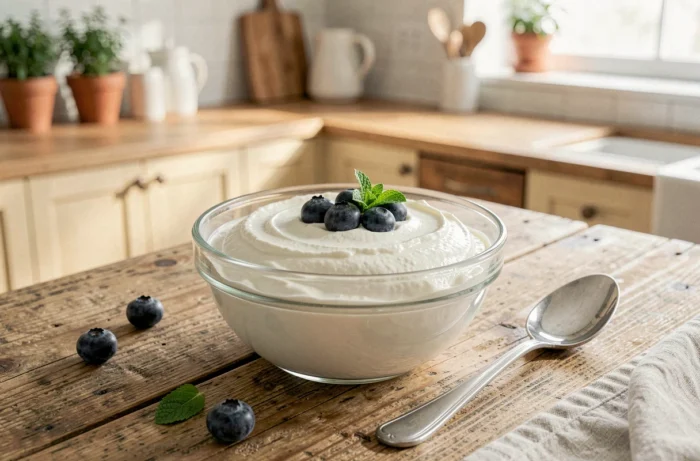
White cheese is one of the most consumed dairy products in France. Rich in protein and often associated with a healthy diet, it is present in everyday meals without questioning its limits. However, certain risks related to its composition or production deserve attention, especially for vulnerable individuals.
Health Alerts on Raw Milk White Cheese: A Trend to Monitor
Do you sometimes buy raw milk farm cheese at a market or organic store? This type of product has been the subject of several official recalls since the end of 2023. The Rappel Conso platform has published notices targeting raw milk farm cheeses due to suspicion of Listeria monocytogenes and salmonella.
A recall dated December 29, 2023, concerns a whole raw milk farm cheese, withdrawn due to suspicion of Salmonella. Associated symptoms (diarrhea, vomiting, fever) may appear in the days following consumption. Other notices in the same category on Rappel Conso describe repeated withdrawals for Listeria in various references of raw milk cheeses.
This is not an isolated case. Since 2023, a series of recalls specifically targets raw milk white cheeses and farm cheeses, making it a concrete point of vigilance. The most exposed groups remain pregnant women, young children, the elderly, and immunocompromised individuals.
For these profiles, as highlighted by Carnet Santé Bpco information, caution involves choosing pasteurized white cheese rather than raw.

0% or 3% Fat White Cheese: A False Nutritional Choice
Most consumers grab a 0% fat white cheese thinking they are making the best choice for their health. Dietitian-nutritionist Ysaline Benakli, interviewed by Marmiton, analyzed the labels of several common references. Her conclusion goes against the grain.
By removing almost all the fat from the milk, 0% fat white cheese also loses the vitamin D associated with dairy fats. However, this vitamin plays a direct role in calcium absorption. Eating a calcium-rich white cheese but low in vitamin D limits the expected benefits.
For Ysaline Benakli, plain white cheese with about 3% fat offers the best compromise. The calorie difference between a 0% and a 3% remains modest in an individual pot. However, the content of fat-soluble nutrients changes significantly.
Read the Label Beyond the Fat Content
The fat content is just one indicator among others. Some 0% fat white cheeses compensate for the absence of fat with additives: modified starch, thickeners, flavors. These ingredients are not dangerous in themselves, but they move the product away from the basic recipe (milk, cultures).
Before buying, turn the pot around. A white cheese with an ingredient list that does not exceed three or four lines will generally be more interesting nutritionally than a 0% whose composition spans an entire paragraph.
Overconsumption of Dairy Proteins and Digestion: Where is the Limit?
White cheese has a high protein content compared to other dairy products like regular yogurt. This is one of the reasons for its popularity among athletes and those on a dietary rebalancing.
Consuming a pot per day generally poses no problem for a healthy adult. Difficulties arise when white cheese becomes the dominant protein source in the diet, meal after meal. Dairy proteins, particularly casein, can then cause:
- Bloating and a feeling of abdominal heaviness, especially in individuals sensitive to residual lactose present even in drained white cheeses.
- Digestive discomfort related to the concentrated protein load, particularly if white cheese is consumed in large quantities in the evening when digestion slows down.
- Nutritional monotony that deprives the body of fiber, heme iron, or certain fatty acids that dairy products alone do not provide.
Varying protein sources remains the most protective reflex for digestion as well as overall balance. White cheese retains its place, but not all of it.
White Cheese and Additives: Spotting Ultra-Processed Formulations
Not all white cheeses are created equal in terms of processing. Between a farm white cheese made of milk and lactic cultures, and an industrial flavored white cheese, the difference in composition can be surprising.
Flavored versions (vanilla, fruits, stracciatella) often contain significant added sugar, sometimes accompanied by glucose-fructose syrup. On a dairy dessert pot sold as “white cheese,” sugar can represent the second or third ingredient on the list.
To quickly identify a product to avoid, here are a few practical guidelines:
- If the ingredient list mentions more than five components, the product strays from traditional white cheese.
- The presence of modified starch, carrageenan, or guar gum indicates industrial texture work intended to compensate for the removal of fats.
- A “fruit” white cheese where the fruits appear after sugar in the list contains more sugar than fruit.
Plain and Unsweetened: The Safest Base
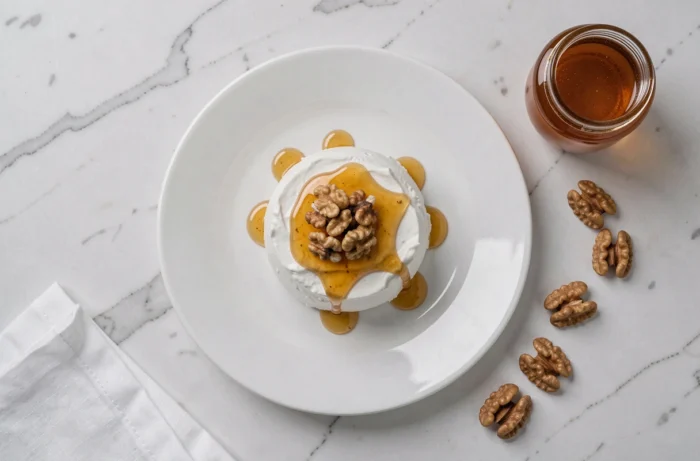
The simplest choice remains plain white cheese, without added sugar. You can accompany it with fresh fruits, a drizzle of honey, or seeds to vary the texture and taste. Controlling what you add is better than enduring what the manufacturer has added for you.
White cheese remains a nutritionally interesting dairy product, provided you choose the right reference and maintain reasonable consumption. Recent health alerts on raw milk versions remind us that food safety also involves careful label reading and adapting choices to one’s health profile.