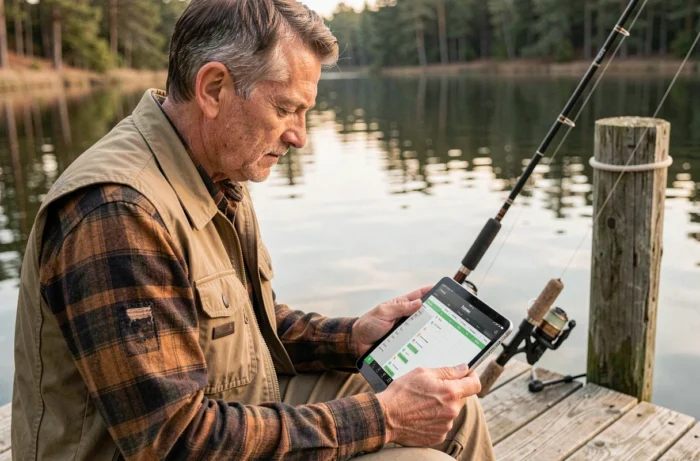
On a dam at the start of the season, we launch a session at dawn, we go through three different spots, and by the time we note the conditions of the last catch, the paper notebook is already soaked. The pen no longer writes, the page sticks. This scenario drives fishermen every year to switch to a digital fishing log accessible from their phone, capable of recording data without depending on the weather or memory.
Automatic weather data and geolocation: what paper can’t do
The first concrete advantage of an online fishing log is the automatic recording of environmental conditions. On an app like FishFriender, simply taking a photo of the catch triggers the saving of the date, GPS location, atmospheric pressure, temperature, wind, and lunar phase.
In practice, we save several minutes per catch. On a productive session with five or six fish, that represents a significant amount of time spent fishing rather than writing. And above all, this data remains usable months later to cross-reference the conditions that produced the best bites.
Offline functionality is a point to check before choosing your tool. Some apps sync data as soon as a connection returns, while others require real-time network access. On an isolated body of water or in a float tube far from any antenna, this distinction changes everything. The news and feedback published on the myfishbookfr site in detail allow you to follow the evolution of these tools and the field feedback from other fishermen.
Online fishing log and scientific monitoring of populations
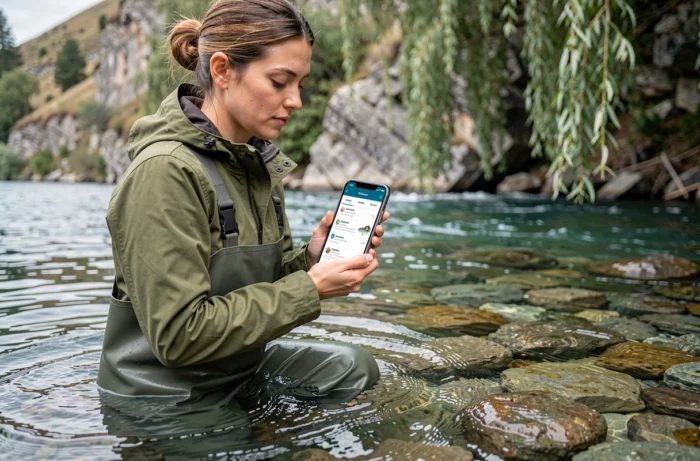
A digital log is no longer just for keeping a personal memory. The collected data now feeds into local scientific monitoring. The FishCapture tool, deployed by the Saône-et-Loire Fishing Federation, voluntarily collects catches and fishing time to improve knowledge about the status of predator fish populations.
This system provides statistics by species, aquatic environment, and period, including average sizes and the number of fish per hour. For the angler, it’s a double benefit: you get a structured personal history, and you contribute to the management of fishery resources without extra effort.
The Truite du Haut-Lignon Forézien association offers a targeted catch log for brown trout, with a focus on waterways considered to be in difficulty like the Cotayet. This type of territorial initiative shows that the digital log is becoming a tool for managing aquatic environments, not just a fisher’s gadget.
Declaration of catches at sea: a distinct regulatory use
In freshwater, the log remains largely voluntary. At sea, the situation is evolving. The REC Fishing app is used for the digital declaration of catches for recreational sea fishing. Its operation is based on a session system: you start a trip, declare each catch with the species and area, then submit the declaration.
A national survey conducted in 2026 among fishermen separately addresses this app and the declaration of catches at sea, indicating that the administrative uses of digital logs are beginning to be evaluated as an independent issue by public authorities.
For fishermen who fish in both freshwater and at sea, this means managing two distinct tools. No public app yet seamlessly combines both contexts. Feedback on this point varies according to profiles and fishing areas.
Concrete criteria for choosing your fishing log app
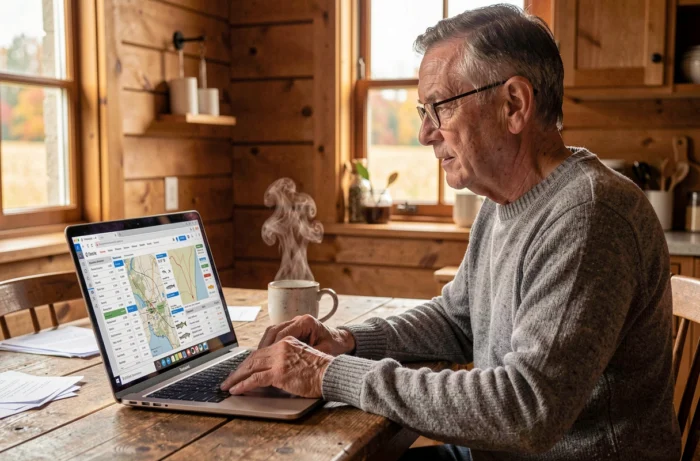
Before downloading the first app you find, a few criteria deserve to be laid out. Not all tools meet the same needs, and the choice depends on your practice.
- Reliable offline mode: the app must record catches without a network and automatically sync upon return. Without this, you lose data on half of the interesting spots.
- Privacy of spots: some apps share the location of catches on a community map by default. Check that there is an option to keep your locations private, especially in less frequented areas.
- Data export: being able to retrieve your history in file format (spreadsheet or PDF) ensures that you are not dependent on a single publisher. If the app shuts down, the data does not disappear with it.
- Species recognition and quick entry: on some tools, the photo allows for automatic identification of the captured species. In fishing action, every second counts, and an entry in less than thirty seconds per catch changes the comfort of use.
The social aspect (sharing photos, rankings among fishermen) interests some practitioners but puts off others. Choose an app that allows you to disable these functions without losing access to tracking tools.
Transitioning from paper log to digital without losing your history
The transition raises a practical question: what to do with years of notes accumulated in a physical log? Complete retrospective entry is rarely realistic. It is recommended instead to digitize the most significant sessions (big fish, atypical conditions, new spots) and start digital tracking from the current season.
Some fishermen keep a paper notebook in parallel for an entire season to compare the two methods. This approach allows you to identify what the digital captures better (weather, precise coordinates) and what the paper still offers (sketches of spots, free annotations that are difficult to structure in a form).
The goal is not to digitize everything, but to make the usable data reliable to improve results from one season to the next. A well-informed online log over two complete seasons already provides enough hindsight to identify trends on the best time slots, productive lures, and favorable conditions by species.