
The primary residence remains an underutilized asset. With the tightening of tax regulations on unclassified short-term rentals and the new powers granted to mayors regarding rental caps, the room for maneuver is shrinking. Monetizing one’s property now requires a careful reading of regulatory constraints before any marketing.
Le Meur Law and micro-BIC: the fiscal framework that changes the game in 2025-2026
Since the Le Meur law of November 19, 2024, mayors can lower by resolution the rental cap from 120 to 90 days per year in their territory. Exceeding this limit exposes one to civil fines of up to 15,000 euros. Before publishing an ad on a short-term rental platform, we recommend checking the current municipal resolution.
On the tax side, the change is drastic. For unclassified short-term rentals, the micro-BIC allowance has dropped from 50% to 30%, with a revenue cap lowered to 15,000 euros per year for income in 2025 declared in 2026. A property owner who rents for a few weeks during the season can quickly find themselves above this threshold without benefiting from a significant allowance.
The actual regime often becomes more interesting. It allows for the deduction of actual expenses (insurance, maintenance, depreciation of furniture) and reduces the taxable base. The calculation should be discussed with an accountant before each season, not after.
To explore other avenues to make money on Mes Petites Annonces, renting is just one lever among others to consider.
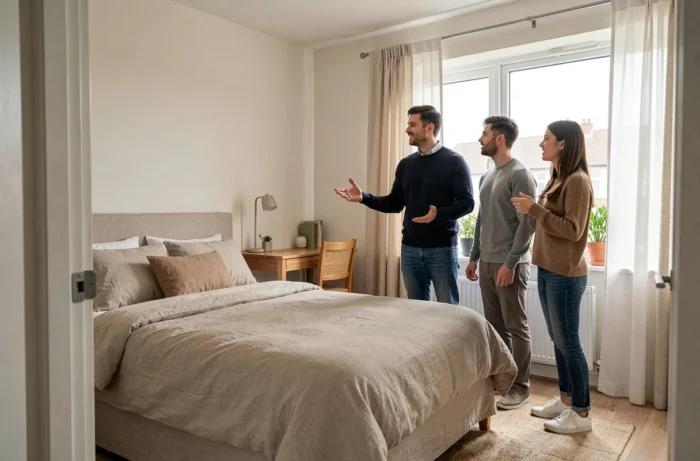
Renting a furnished room: exemption threshold and suitable lease
Renting part of one’s home to a stable tenant remains the most overlooked and tax-advantageous arrangement. When the rented room constitutes the tenant’s primary residence, the rents are exempt from income tax as long as they do not exceed an annual cap set by the tax administration, which is reassessed each year.
This arrangement requires a classic furnished lease (Title I bis of the law of July 6, 1989) or a mobility lease if the tenant is in training, an internship, or on a temporary assignment. Since recent regulatory changes, new mandatory clauses must be included in the standard contract, particularly regarding the resolutory clause and the mention of primary residence.
We observe that many owners overlook one point: the rented room must meet a minimum area and have access to the common areas of the property (kitchen, sanitary facilities). A space of less than 9 m² or a volume of less than 20 m³ cannot legally constitute a dwelling.
Criteria for compliant room rental
- Minimum area of 9 m² and habitable volume of at least 20 m³, with ventilation and natural lighting
- Written lease compliant with the current standard contract, including the new mandatory mentions post-decree 2026
- Rent not exceeding the annual exemption cap published by the tax administration to benefit from tax exemption
- Declaration of the tenant as an occupant to the owner’s insurer, under penalty of non-coverage in case of damage
Monetizing a parking space or storage area without changing the use of the property
Renting parking spaces, garages, or cellars does not fall under the regime of furnished tourist rentals. Therefore, it escapes the restrictions of the Le Meur law and the day cap. Rental income from a parking space falls under property income, with a 30% allowance in micro-property if total gross income does not exceed the regulatory threshold.
In tight urban areas, a parking space can be rented annually for an amount that often covers a significant portion of the property tax. The lease is free (no standard contract imposed), the duration is negotiable, and termination is straightforward for both parties.
Storage spaces operate on the same principle. An unused garage, a dry cellar, or a room adjacent to the property can be offered to individuals through specialized platforms or local ads. The initial investment is zero, and property management is limited to a brief inventory.
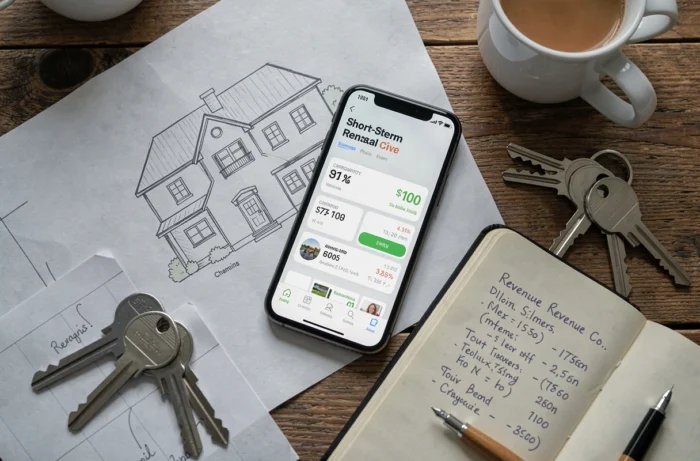
Mixed rental strategy: combining arrangements without legal risk
A property owner can certainly rent a room year-round, offer their entire home for a few weeks in summer, and make their parking space available to a neighbor. These three income streams fall under distinct tax regimes and do not accumulate in the same way.
- Seasonal furnished rental (entire primary residence) is capped in days and falls under BIC
- Furnished rental of a room to a permanent resident falls under BIC but may be exempt under the rent cap
- Rental of parking or cellar falls under property income, with no duration limit
The main risk is requalification as a change of use if the property is repeatedly rented beyond the authorized thresholds. Municipalities that have implemented a registration number for furnished tourist rentals are increasingly actively checking for exceedances.
Precautions before getting started
Checking the co-ownership regulations is a non-negotiable prerequisite. Some co-ownerships explicitly prohibit short-term rentals or subletting, even partially. An owner in violation is exposed to action from the property manager.
Home insurance must also cover rental activity. Most standard multi-risk contracts exclude seasonal rentals. An extension of coverage or a specific contract is necessary to cover damages caused by a temporary occupant.
The profitability of a primary residence is not solely measured by the gross income generated. Tax charges, additional insurance costs, and management time must be factored into the calculation. A parking space rented annually with no management sometimes yields better net returns than a week of seasonal rental after deducting all expenses.